

Raise the Bhar
Professional Booklet Printing in Indianapolis
When you search for booklets near me, you want a local printer who knows exactly what you need. We’re that printer. Bhar Printing creates custom booklets for businesses, nonprofits, and organizations across Indianapolis. We handle everything from event programs to product guides, using quality materials and binding methods that match your project.
Booklet printing combines multiple pages into a single bound package. That simple concept opens up hundreds of uses. Your event needs a program? Your training team needs manuals? Your marketing department wants a look book or sales guide? A booklet is the answer. We print them in sizes and quantities that fit your budget and timeline.
Common Uses for Booklets
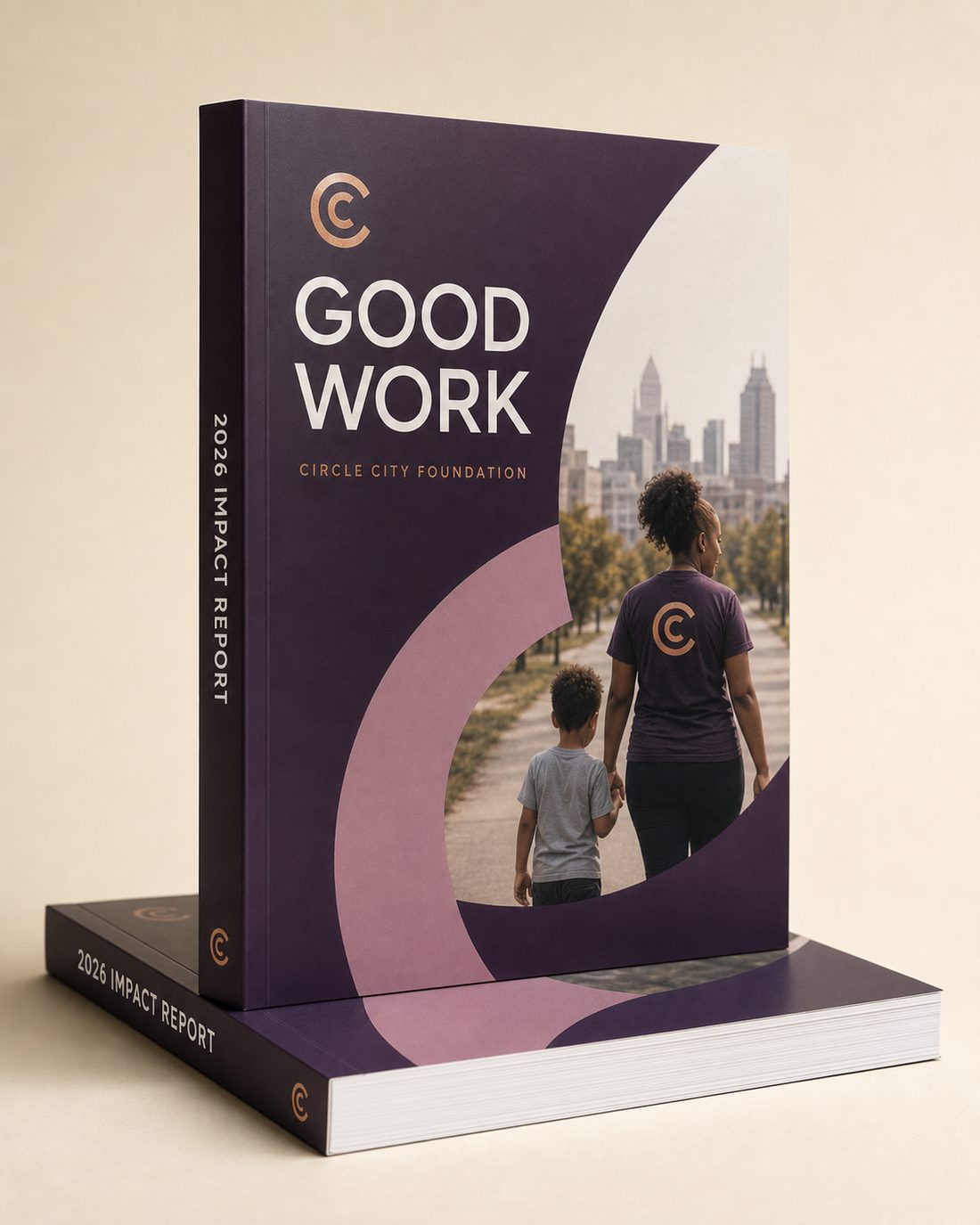
Event programs are one of our most requested applications. Conferences, galas, theater productions, and award ceremonies all rely on printed programs. Attendees get a keepsake that reminds them of the event long after it’s over.
Look books and product catalogs work beautifully as booklets. Whether you’re showcasing real estate, art, or fashion, a bound booklet presents your images and descriptions in a professional format. The pages stay organized. Clients can flip through at their own pace.
Training guides and instruction manuals benefit from booklet format. Employees understand steps better with page-after-page layouts than they do with loose handouts. A bound booklet feels complete and authoritative.
Reports and proposals printed as booklets command attention. Annual reports, sustainability reports, and client proposals all gain credibility when they’re professionally bound. Saddle stitch booklets work for shorter reports. Perfect bound booklets handle thicker documents.
Branded marketing materials like brochures and capability statements reach prospects more effectively when bound. Each page flows into the next. Color images pop on quality paper stock. The binding keeps everything neat until your client is ready to file it away.
Policy manuals and employee handbooks work well as saddle stitch booklets. Staff can reference procedures quickly. The binding prevents pages from getting lost or shuffled. Internal communications, safety manuals, and compliance guides all benefit from professional booklet format. An organization that invests in printed, bound handbooks signals that it takes procedures seriously.
Binding Options Explained
Saddle stitch binding uses staples down the spine. This method works great for booklets up to about 64 pages. The pages fold in half around each other, so thicker booklets become bulky. Saddle stitch booklets lay flat when you open them. That feature matters for event programs and instruction manuals where readers need a hands-free experience.
Perfect binding glues the spines of individual pages together. Unlike saddle stitch, perfect bound booklets don’t have page count limits. You can create a 200-page catalog if your content requires it. Perfect bound booklets look like thin books. They carry professional weight. The downside? They don’t open as flat as saddle stitch, but many customers don’t mind that trade-off.
Wire-o binding and coil binding are options for booklets that need to lay completely flat or stand up on a shelf. Wire-o uses a metal spiral. Coil uses plastic. Both allow pages to fold back 360 degrees. These methods cost more than saddle stitch or perfect binding, but they’re essential for certain uses like training manuals that sit open all day on a workbench.
Understanding Page Counts
Saddle stitch booklets require page counts in multiples of four. If your content is 18 pages, you’ll print 20 pages. If it’s 34 pages, you’ll print 36. That’s because saddle stitch folds full sheets in half. The math works out to multiples of four.
Perfect bound booklets, wire-o, and coil don’t have this restriction. Any page count works. That flexibility makes perfect binding ideal for documents where every page counts and blank pages waste money.
Your front cover and back cover each count as pages. If you have 8 pages of content plus a 4-page cover, that’s 12 pages total.
Popular Sizes
5.5 by 8.5 inches is our most requested size. It’s easy to mail. It fits in a standard envelope. It feels substantial without being oversized.
8.5 by 11 inches is a full letter-size page folded in half. This size gives you more design space. It’s popular for catalogs, annual reports, and training materials where readers need to see images clearly.
Square booklets like 8 by 8 inches or 10 by 10 inches stand out visually. They photograph well for marketing. They don’t fit standard envelopes, so use them when hand-delivery or digital orders make sense.
Other dimensions are possible. Custom sizes cost more because they require additional setup. We’ll discuss your options when you request a quote.
Paper Stock and Cover Options
Paper choice shapes how your booklet feels and functions. Self cover booklets use the same paper for inside pages and the cover. This keeps costs down and simplifies ordering. Your booklet might be all 70 lb cover stock or all 100 lb text. The cover and interior match. Self cover works well for booklets that won’t sit on shelves for months. Event programs printed on self cover feel nimble and appropriate. Training manuals on heavier self cover stock gain durability for frequent handling.
Plus cover booklets add a heavier, sometimes different-textured paper for the front and back cover. Typical setups pair 100 lb cover stock for the cover with 70 lb text for interior pages. The heavier cover protects the interior and creates a more polished feel. If your booklet is a sales tool or a keepsake item, plus cover is worth the investment. Catalogs almost always benefit from plus cover because the thicker front and back prevent bending and creasing during shipping or shelf time.
Gloss, matte, or uncoated finishes change how your booklet feels and photographs. Gloss makes colors pop but shows fingerprints and requires careful handling. Matte offers sophistication and hides smudges better, making it popular for professional reports and upscale catalogs. Uncoated stock feels earthy and natural. Your design and budget guide which finish makes sense. Some designers choose gloss for photo-heavy covers and matte for text pages. Others commit to one finish for simplicity.
Full color printing brings your images and graphics to life across all pages. Black ink only printing costs less and works for forms, manuals, and text-heavy documents where color doesn’t drive the message. Many clients split the difference, choosing full color for the front cover and back cover to draw attention, then black ink only for interior pages to save on production costs.
Design and Setup Support
If you’re not sure how to format your booklet files, that’s normal. Print specifications matter. Bleeds, trim sizes, color modes (CMYK, not RGB), and resolution (300 dpi) all affect the final product. We provide file guidelines. We answer questions. If you need help from the ground up, our graphic design team can create your booklet from scratch or refine a layout you’ve started.
File preparation is one of the biggest reasons booklet projects hit delays. We’ve seen files arrive in RGB color instead of CMYK. We’ve seen 72 dpi photos when the print quality demands 300 dpi. We’ve seen layouts without proper bleeds, which means your background color or image stops short of the trim line. These mistakes are fixable, but they slow things down. We catch them early and walk you through corrections. When your files arrive print-ready, we move fast.
We also print catalogs if your project is larger or more complex than a traditional booklet. Some clients start with a booklet and graduate to a full-scale catalog as their business grows. Either way, we handle the whole process.
Minimum Quantities and Pricing
We offer competitive pricing for custom booklets. Quantities start low. We work with nonprofits and small businesses as readily as we do with large corporations. Contact us for a quote tailored to your page count, size, binding method, and paper choices.
Our team responds fast. We keep things simple. We never push you toward an expensive option when a practical one meets your needs. Curious what quality booklet printing looks like? Browse our portfolio to see examples of our work for clients like yours.
Ready to start? Request a quote or call 317.899.1020. Local pickup is available at 1527 Milburn Street, Indianapolis, IN 46202, Monday to Friday, 8am to 5pm.
Questions We Hear Often
How many pages can a saddle stitch booklet have?
Saddle stitch works best up to 64 pages, though we can push higher in some cases. Beyond that, the bulk becomes impractical and the binding weakens. Perfect binding handles thicker booklets without issue.
What binding method should I choose?
Saddle stitch works for event programs, training guides, and booklets under 64 pages that need to lay flat. Perfect binding is ideal for catalogs, annual reports, and thicker documents. Wire-o and coil are best when you need complete 360-degree lay-flat or when the booklet stands on a shelf as a reference. We’ll guide you based on your pages, use, and budget.
What file setup do you need?
We need print-ready PDFs with CMYK color mode, 300 dpi resolution, and 0.125 inch bleeds on all edges. Page size should match your trim size. If you’re unsure how to set this up, ask us or work with our graphic design team. Mistakes in file setup delay your project and can hurt the final print quality.
What are minimum quantities?
We work on projects of all sizes. Small runs are welcome. Larger quantities get per-unit cost breaks. Get in touch and we’ll price your exact specifications.
Can I order booklets with custom sizes?
Yes, but custom sizes add setup charges. Standard sizes like 5.5 by 8.5, 8.5 by 11, and squares like 8 by 8 are quickest and most affordable. We’ll discuss your options when you request a quote.
Ready to talk about your print job?
Call 317.899.1020, Monday to Friday, 8am to 5pm.