

Printing Knowledge
What Is a Step and Repeat Banner?
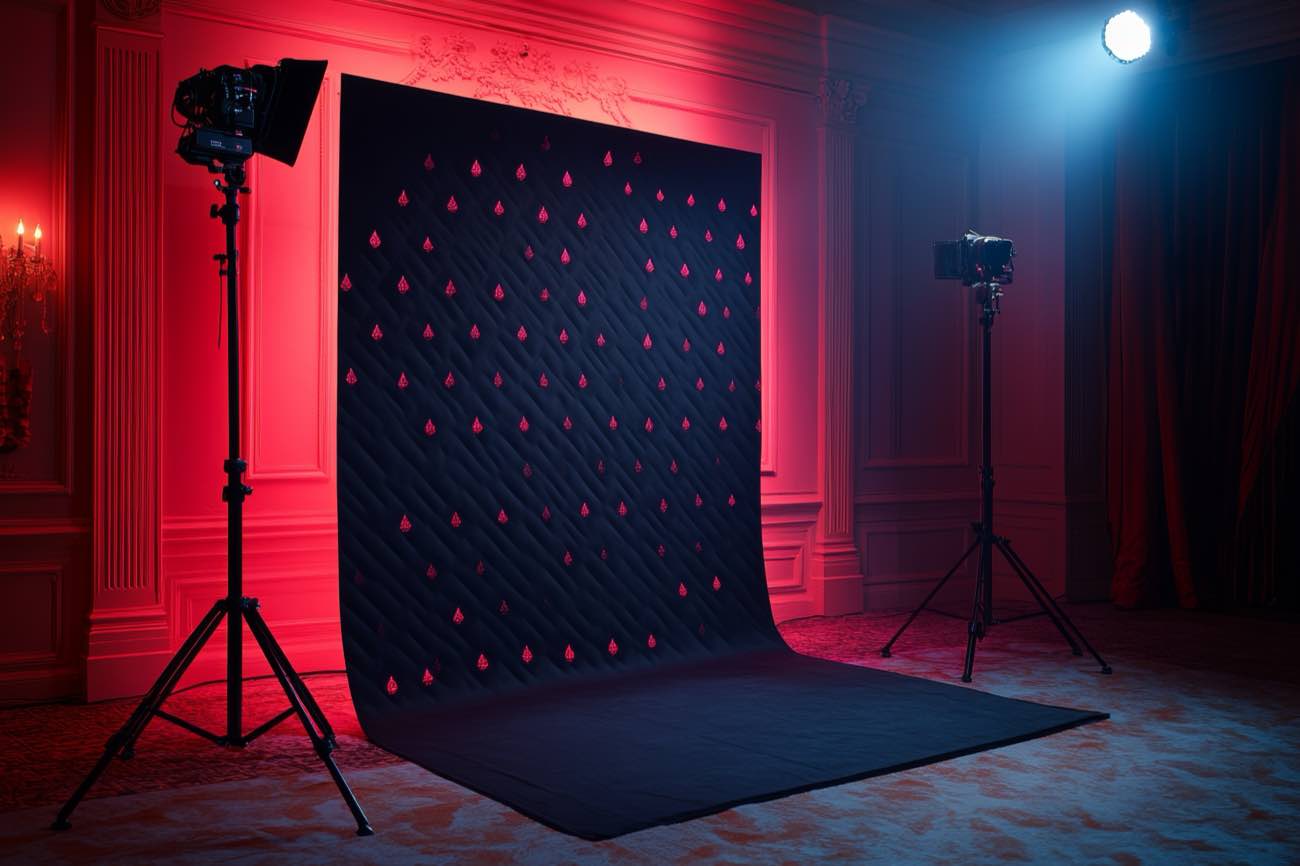
A step and repeat is a large branded backdrop printed with one or more logos repeated in an even pattern, set up behind guests so that every photo taken in front of it carries the branding. The name describes the artwork: the logo steps across the banner and repeats.
They show up at galas, product launches, conferences, and fundraisers. The design looks simple, and it is, but a handful of layout decisions separate a backdrop that brands every photo from one where the logos end up hidden behind people’s heads.
Planning an event? Call 317.899.1020
Standard step and repeat sizes
Size is driven by how many people you need in frame at once, not by the size of the room. Work out the widest group you expect to photograph together, then choose the banner that covers it with margin on both sides.
| Size | Holds | Typical use |
|---|---|---|
| 8 x 8 ft | 1 to 3 people | The workhorse. Fits most ballroom corners and hotel foyers. |
| 10 x 8 ft | 3 to 5 people | Group shots without anyone standing off the edge. |
| 16 x 8 ft | 6 to 8 people | Sponsor walls and press lines. |
| 20 x 8 ft | 8 or more | Large press events and awards backdrops. |
Height is almost always 8 feet, because that clears the tallest guest with room above and matches standard adjustable hardware. Going taller means custom hardware and a taller ceiling than many venues have.
One practical note that catches people out: check the ceiling height and the floor space at the venue before you order. An 8 foot frame needs a little more than 8 feet of clearance to raise, and a 20 foot banner needs somewhere to stand back far enough to photograph it.
Logo size, spacing, and the photo band
The single most useful idea in step and repeat design is the photo band: the horizontal strip roughly 3 to 6 feet off the floor where heads and shoulders land. Guests block that band. Everything you place there will be hidden in half your photos.
So the layout works like this. Logos run edge to edge and top to bottom, sized so that at least one full logo is always visible beside a person’s head. Offset alternating rows, like brickwork, so a vertical gap never runs straight down the middle of the frame. Use an even number of logos across, which keeps a logo, rather than a gap, near the centre where people stand.
Practical numbers that hold up well: logos somewhere around 6 to 10 inches wide on an 8 foot banner, with spacing roughly equal to the logo width. Tighter than that and it reads as busy wallpaper. Looser and a single guest can cover the only logo in frame.
Rows offset like brickwork, an even number of logos across, nothing important stranded in the centre: that is the whole trick, and it is what the repeat on the backdrop at the top of this page is doing.
If you have several sponsors, resist the urge to give each one a different size. Equal weight across all logos looks intentional and avoids an awkward conversation about hierarchy.
Material: the flash problem
This is the decision people regret most, and it has nothing to do with durability. Event photographers use flash. A glossy surface throws that flash straight back into the lens as a hot white blob, usually across the logo you paid to display.
| Material | Under flash | Notes |
|---|---|---|
| Matte vinyl | Very little glare | Durable and easy to wipe down. The safe default for photographed events. |
| Gloss vinyl | Reflects badly | Fine for a daylight banner, a poor choice behind a photo line. |
| Fabric | Almost no glare | Premium look, packs into a bag, and creases fall out. Best for repeat travel. |
If the backdrop will be photographed, choose matte vinyl or fabric. If it will be reused at several events, fabric earns its keep, because vinyl creases along fold lines and those creases catch light.
We print all of these as part of our banner printing, and for a booth that needs a backdrop plus stands and displays around it, our trade show displays cover the whole setup. If your logo files need cleaning up or rebuilding at banner scale, our graphic design team can handle that too.
Questions we hear often
What does step and repeat mean?
It describes the artwork. A logo is placed, then steps across the banner and repeats in an even pattern, so wherever a guest stands the branding appears beside them in the photo. It is also called a press wall or a photo backdrop.
What is the most common step and repeat size?
8 by 8 feet. It holds one to three people comfortably and fits the corners and foyers most venues offer. Move up to 10 by 8 feet if you expect group photos, and 16 or 20 feet wide for press lines and sponsor walls.
How big should the logos be?
Around 6 to 10 inches wide on an 8 foot banner works well, with the spacing between logos roughly equal to the logo width. The test is simple: at least one complete logo should stay visible next to a person’s head no matter where they stand.
Should I choose matte or glossy?
Matte, if the backdrop will be photographed. Event photographers use flash, and a glossy surface bounces it back as a bright spot that usually lands on a logo. Fabric is the other strong option, especially for a backdrop you will reuse.
What file should I supply for my logo?
A vector file is best, because it stays sharp at any size. A high resolution raster file can work if it is large enough for the printed size. If all you have is a small web logo, tell us and we will look at rebuilding it before it goes on an 8 foot banner.
Planning a backdrop for your event?
Tell us the venue, the date, and how many people you need in frame, and we will recommend a size and material. Request a Quote
Or call 317.899.1020, Monday to Friday, 8am to 5pm.